
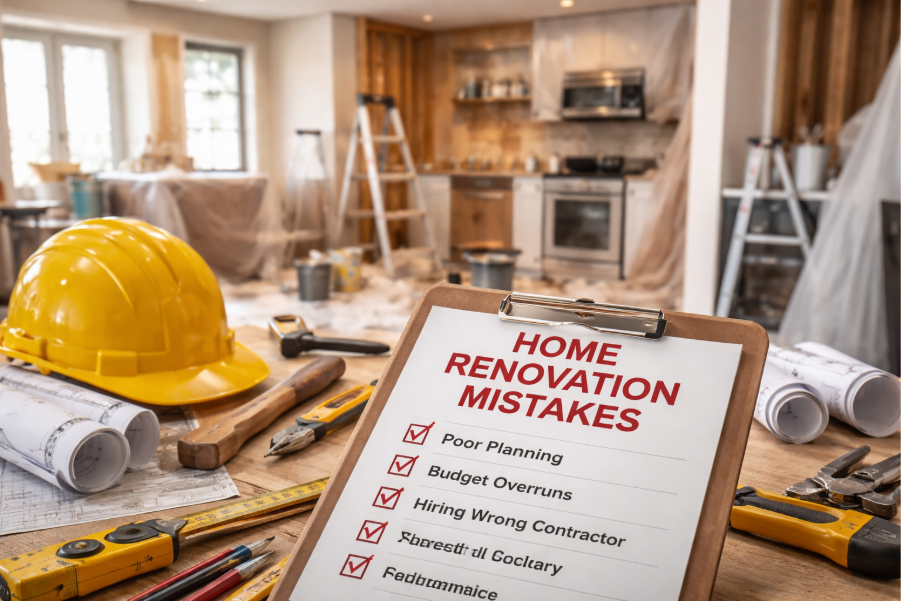
A whole home renovation can transform your living space, but it also comes with challenges that many homeowners underestimate. Without proper home renovation mistakes awareness, even small decisions can lead to long-term issues. That’s why understanding common problems in advance is essential.
In many cases, remodeling projects face delays or inconsistencies due to avoidable remodeling errors. However, with the right mindset and thoughtful preparation, you can navigate the process smoothly. This guide highlights practical lessons and proven renovation tips to help you avoid common pitfalls.
Not Planning the Entire Renovation Properly
One of the most common mistakes is starting without a complete plan. A renovation involves multiple steps, and skipping early planning often leads to confusion later. Many homeowners focus only on design ideas but overlook how those ideas will be executed.
A well-structured plan helps connect every stage of the renovation. For example, it aligns timelines, materials, and labor requirements. Without this structure, projects can quickly become disorganized.
Working with a reliable general construction company can help ensure that your plan reflects practical construction needs. This approach reduces uncertainty and improves coordination throughout the project.
Why Planning Impacts Every Stage
Planning is not just about the beginning. It influences every phase of the renovation. When decisions are made early, execution becomes smoother and more predictable.
In addition, proper planning allows you to anticipate challenges. This reduces the chances of unexpected changes that disrupt progress.
Ignoring a Realistic Scope of Work
Another frequent issue is underestimating the scope of the renovation. Homeowners often start with a simple idea, but as the project evolves, additional work gets added. This can lead to confusion and delays.
Clearly defining the scope helps you stay focused. It also ensures that each task is accounted for before construction begins. Without a defined scope, projects can lose direction.
Moreover, having a clear scope improves communication with professionals. Everyone involved understands what needs to be done and how each step connects to the overall goal.
Choosing Design Over Functionality
Design plays an important role in any renovation. However, focusing only on aesthetics can create long-term problems. A visually appealing space must also be practical for daily use.
For instance, a layout that looks modern may not always support your lifestyle. Therefore, it is important to balance design choices with functionality. This ensures that your home remains comfortable and efficient.
Homeowners exploring kitchen remodeling contractors often realize the importance of this balance. Kitchens, in particular, require thoughtful planning to support both design and usability.
Creating a Functional Layout
A functional layout improves how you move through your home. It supports daily activities and enhances overall comfort.
In addition, selecting materials that are durable and easy to maintain contributes to long-term satisfaction. Combining these elements results in a space that performs as well as it looks.
Not Setting Clear Priorities
Renovation projects involve many decisions, and not all of them carry the same importance. Without clear priorities, it becomes difficult to stay focused on what truly matters.
Setting priorities helps guide your choices. It allows you to allocate attention to areas that have the greatest impact on your home. This approach also simplifies decision-making during the project.
Furthermore, clear priorities reduce the risk of unnecessary changes. When you know your goals, you are less likely to deviate from your plan.
Overlooking Small Details
Small details often have a big impact on the final outcome. However, they are frequently overlooked during the planning phase. This can lead to inconsistencies in the finished space.
Paying attention to details ensures a more refined result. It also helps maintain consistency across different areas of your home. From finishes to fixtures, every element contributes to the overall design.
In addition, focusing on details early prevents last-minute adjustments. This supports a smoother renovation process and reduces stress.
Poor Communication with Professionals
Communication plays a crucial role in any renovation project. When communication is unclear, misunderstandings can arise. These issues can affect timelines and overall quality.
Regular updates and discussions help keep everyone aligned. They ensure that expectations are understood and met. This creates a more collaborative working environment.
If you need guidance at any stage, you can Contact us to discuss your ideas and clarify your renovation approach.
Building a Clear Communication Process
Establishing a communication plan helps avoid confusion. It ensures that updates are shared consistently and that concerns are addressed quickly.
In addition, open communication builds trust between homeowners and professionals. This contributes to a more positive renovation experience.
Rushing the Renovation Process
Many homeowners want to complete their renovation as quickly as possible. However, rushing can lead to mistakes that are difficult to fix later.
Taking the time to plan and execute each stage carefully results in better outcomes. It also allows you to make thoughtful decisions rather than reacting under pressure.
A whole home renovation requires patience. Each phase builds on the previous one, and rushing can disrupt this flow.
Ignoring Future Needs
A renovation should not only address current needs but also consider the future. Many homeowners focus only on immediate improvements, which can limit long-term usability.
Thinking ahead ensures that your home remains functional over time. For example, flexible spaces can adapt to changing lifestyles.
In addition, planning for the future reduces the need for additional renovations later. This makes your investment more practical and sustainable.
Not Following a Structured Process
A structured process is essential for managing a renovation effectively. Without it, tasks can become disorganized, leading to delays and inefficiencies.
Following a step-by-step approach ensures that each stage is completed properly. It also helps maintain consistency throughout the project.
Homeowners planning a whole home renovation often benefit from a clear process that guides them from start to finish.
Importance of Step-by-Step Execution
Breaking the project into phases makes it easier to manage. Each step builds on the previous one, creating a logical flow.
In addition, a structured approach helps identify potential issues early. This allows for timely adjustments and better results.
Lack of Flexibility During Execution
Even with careful planning, unexpected changes can occur. Being too rigid can make it difficult to adapt to these situations.
Flexibility allows you to handle challenges effectively. It helps you adjust your plans without compromising the overall outcome.
At the same time, flexibility should be balanced with your original goals. This ensures that changes remain aligned with your vision.
A thoughtful whole home renovation benefits from both structure and adaptability.
Final Thoughts on Avoiding Renovation Mistakes
Renovation mistakes are common, but they are also preventable. By understanding potential challenges, you can make better decisions throughout your project.
From planning and communication to execution and flexibility, every step plays a role in achieving a successful outcome. Applying these renovation tips helps you stay on track and avoid unnecessary complications.
Ultimately, a well-managed whole home renovation creates a space that is both functional and comfortable, supporting your lifestyle for years to come.
Frequently Asked Questions (FAQs)
-
Common mistakes include poor planning, unclear scope, and lack of communication. These issues can lead to delays and inconsistencies. Addressing them early helps improve the overall renovation experience.
-
You can avoid remodeling errors by creating a clear plan and following a structured process. Regular communication with professionals also helps prevent misunderstandings during the project.
-
Planning ensures that every step is organized and aligned with your goals. It reduces uncertainty and helps manage timelines effectively. A strong plan leads to better results.
-
Yes, changes are possible, but they should be managed carefully. Flexibility is important, but it should not disrupt the overall flow of the project. Planning ahead reduces the need for major changes.
-
Start by defining your goals and creating a detailed plan. Understanding your needs and working with professionals helps you move forward with confidence.